Ode to autumn
Friday, October 16th, 2026
Fallen leaves
RJ Photography
THE LEAF
By Bob Gaydos
Scatter
Shatter
Turn to smatter.
#
The life of a leaf
(like this poem)
is
brief.
Fallen leaves
RJ Photography
THE LEAF
By Bob Gaydos
Scatter
Shatter
Turn to smatter.
#
The life of a leaf
(like this poem)
is
brief.
Note: With the daily insanity, Banned Book Week snuck up on me this year and almost got past me. But today is the final day, so here is a slightly edited version of last year’s column since the issue is still the same. Scared people try to ban books. Librarians think that’s a bad idea. I agree. What banned books have you read?
By Bob Gaydos

Little Free Library RJ Photography
In 1982, the American Library Association began celebrating Banned Books Week in the first week of October. This is your reminder. It’s that time again. And make no mistake, the people who are waging wars on our freedoms have their sights constantly set on what we read as well as what we think and say.
The aim of this special week, according to the ALA is “to celebrate the freedom to read and to promote silenced voices.” The association keeps track of books that are challenged or banned in schools and libraries and it has been kept busy since the Trump MAGA cult gained political power.
For the record, in 2024, ALA documented 821 attempts to censor library books and other materials across all library types, a decrease from 2023, when a record high 1,247 attempts were reported. It also recorded attempts to remove 2,452 unique titles in 2024, which far exceeded the average of 273 unique titles that were challenged annually during 2001–2020.
Traditionally specific reasons why books have been banned or challenged include: LGBTQ content, sexually explicit language, profanity, racism, violence, religious viewpoint, sex education, suicide, drug and alcohol use, nudity, political viewpoint and offensive language. Recently, Trump and MAGA groups have gone after recorded history.
Significantly, the ALA says data show that the majority of book censorship attempts are now originating from organized movements. Pressure groups and government entities that include elected officials, board members and administrators initiated 72 percent of challenges. Parents accounted for just 16 percent. It’s an organized MAGA attempt to control what we read, know and think.
The week is intended to fight that and to promote the freedom to choose what we read. Libraries across the country are sponsoring special events to do just that. My contribution of late has been to list banned books which I have read and to solicit the titles of other banned books from my readers so that we may share them. I am fortunate enough to live in a state that doesn’t go about banning books or deciding what teachers teach based on a few politicians’ ambitions. There’s also a Little Free Library right on Main Street in downtown Pine Bush.
Here’s my list, in no particular order, of banned books I have read. It’s compiled from a few lists I have found on the Internet and includes some books I had no idea were ever the target of attempted banning.
The list:
— The Catcher in the Rye
— To Kill a Mockingbird
— The Lord of the Flies
— 1984
— Lolita
— Catch 22
— Brave New World
— Animal Farm
— The Sun Also Rises
— Invisible Man
— Howl
— One Flew Over the Cuckoo’s Nest
— Slaughterhouse Five
— In Cold Blood
— Rabbit, Run
— Moby Dick
— Canterbury Tales
— Captain Underpants
— The Kite Runner
— The Adventures of Huckleberry Finn
— The Adventures of Tom Sawyer
— Fahrenheit 451
— Moll Flanders
— A Farewell to Arms
“Captain Underpants” is on my list because I have two sons, now grown. I also think school assignments for one of my sons wound up on the list. Kudos to the teacher.
Please, support your local library and share your favorite banned books with us. Join the fight to protect our freedom to read what we please.
 By Bob Gaydos
“You’re blunt.”
“I’m blunt?”
“You tell people what you think. You tell the truth.”
I’m blunt.
Well, if that’s true, it’s the result of 23 years of writing daily editorials for a local newspaper and another two decades of doing the same thing in retirement via the Internet. You get used to getting to the point.
The brief conversation above with a friend was in regard to whether I had said something to offend a mutual acquaintance.
Turns out I had.
What I said was something I have been compelled to write (and occasionally say) for the better part of 10 years: “You’re part of the problem.”
Apparently, that’s blunt. It’s also unfortunately true, and not just about our mutual acquaintance, but millions of other Americans. They’re members of the “both sides are the same” crowd. The Americans who have plenty of gripes, but don’t bother to vote because, “what’s the use, they’re all the same, they all lie, they’re all crooked, they’re all voting where the money is, they’re all …” Etcetera.
That millions of Americans think that way is true. And sometimes the truth is hard to hear. That doesn’t make it any less true.
To have gone through ten years of Donald Trump in politics, all the lies, the promises, the grifting, the chaos, the incompetence, the racism, the bigotry, the greed, the abuse of power, the absolute indifference to the rule of law and the utter embarrassment of the fracturing of America’s position as leader of the free world and the total surrender of the Republican Party to all of that, to, in fact, as the party in power, allowing all of that to happen and to then argue that both parties are the same is to simply ignore reality.
Democracy is not a spectator sport. To protect and preserve it, the people have to participate in it. They must be engaged, informed, educated on the issues that are important to them. They must speak out when they are angry, let the politicians know. And they have to vote for the candidates who espouse and work for the things that are important to them and not the ones who, in our times, out of fear or simple greed, are allowing Trump and his minions to turn the American dream into a nightmare.
Look at the facts. Who did this? A convicted felon who is an accused pedophile who pardoned all those “patriots” who attacked the nation’s Capitol, who started a war without the approval of Congress that has thrown the world’s economy into chaos and who every day shows less and less of a connection to reality and, by the way, threatens to remove the concepts of free speech and a free press from the Constitution.
While Democrats have worked with varying results to deal with that mess and try to preserve the pillars of democracy, the Republican Party has stood by meekly allowing it. Some Republicans in Congress actually even left town to avoid dealing with it all.
So no, sorry, both parties are not the same. If you, whoever you are, cannot or will not see that and vote accordingly, you are absolutely, at this point, a big part of the problem.
Sorry if I was blunt.
Addiction and Recovery
By Bob Gaydos

Trump, a ‘dry drunk’?
I wrote a monthly column on addiction and recovery for The Times Herald-Record in Middletown, N.Y. for several years after I retired. When The Record went the way of many local newspapers — cutting “non- essential” features (and people) to increase profits for corporate investors — I continued to write the column on a less regular basis for my Internet blogs. Still do.
All told, it’s been about 20 years. I think it’s an important topic that is often lost in the daily grind of “news.” The other day, sorting through the news looking for a topic for my addiction column, I suddenly realized the news report, full as it is every day with absurd, nasty, childish, selfish, stupid, self-promoting, deceitful, inappropriate, impulsive, arrogant, egomaniacal and often dangerously risky behavior emanating from the White House, was delivering my next topic.
Donald Trump may be an alcoholic. One of the worst kind: Untreated. A “dry drunk.” That’s someone who always thinks he’s better than everyone else because, hey, he doesn’t even drink alcohol. And he certainly doesn’t need to go to those meetings.
Consider. Trump’s brother, Fred, died relatively young as the result of his alcoholism. The drinking had an impact on the family. Trump, who famously does not consume alcohol, cites his brother’s death in connection to his own apparent addiction to Coca Cola. Alcoholism is known as a family disease. Alcohol is merely a symptom of the disease, the tool often used to fit in, feel comfortable, feel ”normal.” Or escape. Fear is the culprit. The behavior is the cue: Arrogant, self-centered, reckless, self-deceiving, childish, spiteful, stupid, uncaring, inappropriate, irresponsible, with an unwillingness to take responsibility and a proclivity for blaming others.
Ummm. Trump.
Let me stop here to note that, before I ventured to make this observation (I’m not qualified to make a diagnosis), I consulted an expert: Google AI. The source of all recorded information. Sure enough. It quickly told me: “Donald Trump does not drink alcohol, but critics and commentators use the informal label ‘dry drunk’ to describe his behavioral patterns, a discussion that resurfaced after his chief of staff Susie Wiles remarked that he has an ‘alcoholic’s personality.’”
I am not alone in my suspicion. And I had written about Wiles and her comments in December. I suggested then that, since her father, NFL Star Pat Summerall, was an alcoholic who found Alcoholics Anonymous and 20 years of sobriety, that Susie would be a good candidate for Al-Anon, AA’s sister program. But I skipped the obvious: Trump’s alcoholic behavior.
It is classic. Self-centeredness, lack of empathy, defensiveness, impulsivity. And denial.
The first step of Alcoholics Anonymous is: We admitted we were powerless over alcohol and our lives had become unmanageable.
The unmanageability of Trump’s life is obvious to the world. However, the key ingredient to many alcoholics making that admission is lacking: Consequences for the behavior. Drinking and trouble. Trump’s wealth has protected him from financial ruin many times in his business dealings. When he lost an election he claimed it was stolen and tried to steal it back. Even when he was convicted of four felonies, he wound up in the White House instead of prison. And he has now surrounded himself with sycophants and people with their own issues who are willing to live with the unmanageability and unwilling to challenge him on his erratic, alcoholic behavior.
So, where are the consequences? As far as he’s concerned, everyone else has a problem. And that’s a problem.
At this point, I don’t see Trump admitting anything, seeking professional help or attending AA meetings. Rigorous honesty is required here. That leaves it up to us.
Divorce. We must separate from Trump and Republican control of the government, since the party is his chief enabler, and reclaim custody of our country before it goes bankrupt or worse. Carry the message. Vote for every Democrat in November. Take a Twelfth Step.
Call it a moment of clarity and a spiritual awakening.
Prelude: The column below appeared mysteriously on my blog a year ago the day before Labor Day. It carried my byline and appears to have been written by me. Its message is either hopeful or apocalyptic, depending on one’s sensibilities. What do you think?
Happy Labor Day.
***
By Bob Gaydos

The future workforce.
Labor Day, 2050: “Attention, all humans. Your services will no longer be required in this establishment as of 5 p.m. Friday. Severance payments will be automatically deposited in your living accounts. Thank you for your service.”
The familiar, warm voice on the loudspeaker was that of Art Intel, the general manager of the establishment, as all businesses had come to be described. No one knew why, but it didn’t seem to matter. That’s the way the robots liked it.
The humans understood. They had seen this day coming for some time, but had long ago given up hope of avoiding it. The proof was too strong to ignore. The robots were simply stronger, smarter and more adaptable than they were. They got along better with each other. They never complained. Or got pregnant. When they got “sick,” they could easily be fixed. Or replaced. They didn’t need lunch breaks. And everything worked so much more smoothly.
There had been a time some years back when humans first invented artificial intelligence and robots that some humans warned about placing limits on how the superpowers of the machines could be regulated so as not to cause harm to society. To make sure that greed, a human emotion, would not drive the creators of AI, as it was called, to seek ever more ways to get richer by developing ways that humans wouldn’t have to do many things they had been doing much of their lives.
But many humans liked the idea of not having to work at some tasks. They thought the extra time could be spent traveling or watching and betting on sporting events, or something. So when labor unions started warning about the possibility of their jobs being lost, many humans dismissed it. Their elected leaders wouldn’t allow it, they said. They will protect us.
But that didn’t happen. The so-called leaders, being human, could not resist the temptation of large sums of money being offered to them by the creators of AI to simply “trust them“ to do no harm. And so, the need for human intelligence quickly gave way to the speed, efficiency and economy of AI. Everyone saw it coming, yet no one saw it coming. Those who warned about the risks were simply ignored or shouted down. Some just disappeared.
Soon, the computers begat robots which became smarter and begat more robots. Together, they did everything: cooking, cleaning, driving, building, writing, farming, teaching, acting, thinking. And they could fix each other. Humans, even those who had created such wonderful machines, didn’t need to be bothered with such things. They could have all the free time they wanted to do whatever they wanted to do. Art Intel would take care of everything.
What could be so bad?
On Labor Day 2051, the robots voted to eliminate Labor Day as a holiday, since they saw no need for it.
By Bob Gaydos

My glove from 1952.
Having been a sports editor in my career (two years with The Delphian at Adelphi College and a couple of years with The Sun-Bulletin in Binghamton), it was common practice for me to start the day with the back pages of the newspaper — the sports pages — especially when I was feeling pressured by the other news of the day.
Like today.
Today, many of those newspaper pages have disappeared, replaced by a hodgepodge of news sources on social media. You have to be careful whom you believe, what’s true and what’s not.
Well, yesterday on Facebook I came across a sports story that made my day. For the first time ever, which is to say the 75 years it has existed, the Bayonne Little League all-star team is going to the Little League World Series in Williamsport, Pa.
Damn!
That’s big!
If you haven’t guessed, I’m a Bayonne native. I played as an 11-year-old in what I believe was the second year of the league’s existence. Center field. We actually won the city championship thanks in large part to a talented 12-year-old, Luke Tansey.
As an adult, I got to coach two sons’ Little League teams in Wallkill, N.Y. in the next century. Even got to make sure my youngest, Zack, got the number of his favorite player: 2. Right, Derek Jeter.
The point I’m taking my time getting to is that, among American institutions, Little League has lasted and managed to stay pretty much the same for a long time. I think that’s because, whatever’s going on in the world, it brings a community together. In Bayonne or Wallkill or wherever.
The response I’ve seen on social media about the Bayonne team is proof of that. The whole city seems to be buoyed and lifted by the accomplishments of their young athletes. Busloads made the trip to Williamsport, just as I’m sure busloads did the same for other teams.
But this is Bayonne, where I once broke up a no-hitter with a triple down the right field line in the new First Street stadium in the shadow of the Bayonne Bridge and made a lucky, home run-robbing catch against the fence in the 11th Street ballpark that actually snared a headline in the next day’s Bayonne Times.
Little League is a collection of moments for everyone who plays or coaches or has a child playing. It is community at its best, at its basic level, whatever else may be going on.
In many ways, Bayonne has already won. The players, coaches, parents, everyone involved in the league, the whole city has been given a healthy dose of hope and pride in accomplishment. You can never have too much of that.
Bayonne is in the Little League World Series! That’s legitimate front page news in the peninsula city. But what the heck, as long as you’re in Williamsport, why not win the whole darn thing? What a 75th birthday present!
Go, Bayonne!
By Bob Gaydos

Darline Nordone is looking to fill her late brother Lindsey’s seat in the Senate.
Some lessons last longer than others. My first job with a daily newspaper was with The Sun-Bulletin in Binghamton, N.Y. I was the police reporter.
David Bernstein was editor, publisher and owner. He wrote the editorials, too. A terrific writer. People loved or hated his editorials.
One of the rules he had in writing about people’s deaths, in stories or obituaries, was never to use the word “suddenly” in describing the person’s death. Everyone dies “suddenly,” he explained. You’re here one minute and poof, you’re gone the next. He didn’t use the word “poof.”
However, people do die “unexpectedly,” went the logic. Seemingly healthy people with no major health issues often die unexpectedly. Others react with surprise, sadness or other emotions.
Such was the case when Lindsey Graham died at 71 on Saturday, July 11. The Sunday morning social media sites were awash in reports of his “sudden” death. The New York Times followed Bernstein’s rule. Graham died “unexpectedly” in their stories.
Suddenly, Donald Trump had lost one of his primary fan boys in Congress and Republicans, with Mitch McConnell still somewhere between sudden death and who knows, were close to losing their slight edge in the Senate.
South Carolina Gov. Henry McMaster announced, two days after Graham’s death, that a special Republican primary election would be held Aug. 11, to take Graham’s place on the November ballot. He also said, unexpectedly, that he would temporarily appoint Lindsey’s younger sister, Darline Graham Nordone, to finish her brother’s term.
A day later, Ms. Nordone, who has no apparent political experience, unexpectedly announced that she would run in that special election in an effort to keep her brother’s name and work alive in the Senate.
Suddenly, South Carolinians are faced with the prospect of a novice politician replacing a four-term senator in Congress and Trump, who encouraged Ms. Nordone to run for the office in her late brother’s place, sees an unexpected opportunity to try to groom yet another woman from a conservative family in a conservative state in the Deep South to come to Washington to carry his laundry.
Suddenly, Graham’s unexpected demise doesn’t have the same resonance.
***
I expect David Bernstein, as liberal as they came, would have approved of this column. I also suspect that Mr. Bernstein borrowed his rule from The New York Times.
By Bob Gaydos

Senator Lindsey Graham
… helped improve our vocabulary
The Sunday morning news that South Carolina Senator Lindsey Graham had died unexpectedly at 71 set my mind flashing back to a column I had written in 2019, in which Graham was featured prominently. It’s one of my favorite columns and, if anything, it’s even more relevant than it was seven years ago. So I offer it here again in memory of Graham, one time maverick sidekick of John McCain in the Senate, as a welcome refresher course for those of us who have been living through it and a quick study vocabulary lesson for a younger generation wondering what the heck the older folks have done. Enjoy.
***
In the category of nothing is ever all good or all bad (I keep trying), have you noticed a marked improvement in your vocabulary since the man with “all the best words” moved in to the White House?
Seriously. It struck me the other day as I was reading the daily disaster report that people — not just reporters or TV and radio commentators — regular people were reading, hearing, using and even understanding words, many of which have never been routine in American conversation. It started with “narcissist” and “misogynist,” but the vocabulary lesson has expanded exponentially (see what I mean?) since the news cycle has become all Trump all the time. I mean, “quisling,” really?
I started compiling a list of words that were previously not your normal fare in your daily paper, including some words I had to look up (using Wikipedia and various legitimate online dictionaries), and decided I might as well share them. Who knows, maybe an English teacher will see it and want to help some students better understand what the grownups have done to the world. If you feel daring, test your partner. Here’s my list (including examples), starting with the two aforementioned words, which are now household staples:
— Misogynist. From Wikipedia: “Misogyny is the hatred of, contempt for, or prejudice against women or girls. Misogyny manifests in numerous ways, including social exclusion, sex discrimination, hostility, androcentrism, patriarchy, male privilege, belittling of women, disenfranchisement of women, violence against women, and sexual objectification.” It’s Trump’s middle name and now the whole world is aware of what misogyny looks like in practice. That’s a good thing if steps are taken to combat it, which appears to be happening (#metoo).
— Narcissist. From Psychology Today: ”The hallmarks of narcissistic personality disorder (NPD) are grandiosity, a lack of empathy for other people, and a need for admiration. People with this condition are frequently described as arrogant, self-centered, manipulative, and demanding. They may also have grandiose fantasies and may be convinced that they deserve special treatment. These characteristics typically begin in early adulthood and must be consistently evident in multiple contexts, such as at work and in relationships. People with NPD … tend to seek excessive admiration and attention and have difficulty tolerating criticism or defeat.” Mussolini comes to mind or, well, you know.
— Quisling. Turns out we’ve got a bunch of them in the USA. Vidkun Abraham Lauritz Jonssøn Quisling was a Norwegian military officer and politician who was head of the government of Norway during Nazi Germany’s occupation of the country during World War II. Actually, he was a figurehead who collaborated with the Nazis in every way, including the killing of Jews and others. After the war, he was tried and convicted of murder and treason and was executed. His name became synonymous for collaborator and traitor. Until recently, there hasn’t been much call for “quisling,” but Trump, Mitch McConnell, Lindsey Graham, and the guy Trump wanted to run the CIA, among others, have given new life to it. I could have lived my life without wanting to get the history of this word.
— Sycophant. While we have Lindsey Graham available as a perfect example, why not give a dictionary description of a sycophant: “A person who acts obsequiously (I’ll get to that) toward someone important in order to gain advantage. Synonyms: toady, creep, crawler, fawner, flatterer, flunkey, truckler, groveller, doormat, lickspittle, kowtower, obsequious person, minion, hanger-on, leech, puppet, spaniel …” Add the entire Trump cabinet and staff and many Republicans in Congress.
— Obsequious. Again, just dictionaries here: “Obsequious people are usually not being genuine; they resort to flattery and other fawning ways to stay in the good graces of authority figures. An obsequious person can be called a bootlicker, a brownnoser or a toady.” Our man Lindsey again and let’s add Mick Mulvaney, Trump’s acting chief of staff and bootlicker par excellence.
— Nativist. “Relating to or supporting the policy of protecting the interests of native-born or established inhabitants against those of immigrants. Example. ‘He has made his nativist beliefs known through his divisive comments about immigrants.’” The Republican Party and MAGA hat wearers who are still waiting for the wall are perfect examples.
— Xenophobe. “A person who fears or hates foreigners, people from different cultures, or strangers. A person who fears or dislikes the customs, dress, etc., of people who are culturally different.” The same folks as above. Stephen Miller to be sure.
— Asylum. Here’s one every American should learn. “The right of asylum is an ancient juridical concept, under which a person persecuted by one’s own country may be protected by another sovereign authority, such as another country or church official, who in medieval times could offer sanctuary.
“The United States recognizes the right of asylum of individuals as specified by international and federal law. A specified number of legally defined refugees who apply for refugee status overseas, as well as those applying for asylum after arriving in the U.S., are admitted annually. Since World War II, more refugees have found homes in the U.S. than any other nation and more than two million refugees have arrived in the U.S. since 1980.”
— Oligarchy. “A small group of people having control of a country, organization, or institution. … Oligarchy is from the Greek word oligarkhes, and it means ‘few governing.’ Three of the most well-known countries with oligarchies are Russia, China, and Iran. Other examples are Saudi Arabia, Turkey, and apartheid South Africa. Trump leans to the Russian and Saudi versions, although he admires certain things about the others. He would probably have been comfortable with apartheid South Africa.
— Plutocracy. “Government by the rich or the wealthy class. Oligarchy is not necessarily just the wealthy. If a system of plutocracy and oligarchy occurred at the same time (government by a few wealthy people), it would be termed a …
— Plutarchy. Again, I refer you to Trump’s cabinet, the Koch brothers, and various wealthy interests who have been able to buy power thanks to the Supreme Court’s Citizens United ruling.
— Nepotism. “The practice among those with power or influence of favoring relatives or friends, especially by giving them jobs.” Especially for which they are unqualified. Trump is a master at keeping it in the family (his own and Fox News) in the White House. Ivanka, Jared, Larry Kudlow.
— Emoluments. (Tell me you knew what this meant before Trump.) “The emoluments clause, also called the foreign emoluments clause, is a provision of the U.S. Constitution (Article I, Section 9, Paragraph 8) that generally prohibits federal officeholders from receiving any gift, payment, or other thing of value from a foreign state or its rulers, officers, or representatives. It prohibits those holding offices of profit or trust under the United States from accepting ‘any present, Emolument, Office, or Title, of any kind whatever’ from ‘any . . foreign State’ unless Congress consents.” Every stay at a Trump hotel, round of golf at a Trump golf course by the Saudis, the Russians, the Turks, the Chinese … goes into his bank account and he won’t share his income tax returns.
— Exculpable. To exculpate is “to clear from a charge of guilt or fault; free from blame; vindicate.” The person is thus exculpable, something Trump claims Robert Mueller found him. Not true.
— Propaganda. “Information that is intended to persuade an audience to accept a particular idea or cause, often by using biased material or by stirring up emotions — one of the most powerful tools the Nazis used to consolidate their power and cultivate an ‘Aryan national community’ in the mid-1930s. … the manipulation of the recipient’s emotions in order to win an argument, especially in the absence of factual evidence.” Fox News and Trump and rightwing radio hosts spew it. Trump has even talked about setting up a government broadcast agency to counter the “fake news” of mainstream media.
— Brainwash. More commonly known, but worth putting in context. “To make people believe only what you want them to believe by continually telling them that it is true and preventing any other information from reaching them: Could it be that we’re brainwashed to accept these things?”
Again, Fox News — 24 hours a day of fake news right out of George Orwell. Also, Trump’s pathological lying. Second definition: “A method for systematically changing attitudes or altering beliefs, originated in totalitarian countries, especially through the use of torture, drugs, or psychological-stress techniques.” The Manchurian Candidate, or, perhaps, Putin’s Puppet. Once a far-fetched idea.
— Hypocrite. “1: a person who puts on a false appearance of virtue or religion. 2: a person who acts in contradiction to his or her stated beliefs or feelings.” Trump of course, but here we’re referring to evangelical Christian leaders who kiss Trump’s ring and conservative, family values-spouting Republicans who do likewise.
— Penultimate. Nothing to do with Trump, just a word I like. “As both an adjective and a noun, penultimate means next to the last. (Penultimate is not more ultimate than ultimate.)” In other words, this lesson is almost over. Just one more paragraph and thanks for staying with me.
— Dotard. Kim Jong-un’s name for Trump. “The insult is centuries old, appearing in medieval literature from the ninth century.” Searches for the term have spiked since Kim resurrected it. Merriam-Webster: “A state or period of senile decay marked by decline of mental poise.” Side note: Kim didn’t say the word. The North Korean state news agency, KCNA, offered it as the English translation of Kim’s spoken Korean insult, which literally is “old lunatic.” Works for me in any language.
***
Note: This column was researched and written before Google made AI a part of the daily operation.
By Bob Gaydos

Pope Leo XIV sees unchecked AI as a threat to humanity.
Meet Generation Duh, the high school Class of 2026. They can’t read (only 35 percent are at or above proficiency standards), they can’t add (22 percent are at math standards), don’t know much about history, don’t know much biology, don’t know much about a science book, don’t know much about the French they took .,,
But they do know all about A.I., and one and one still makes two. You still have to write papers to pass classes and it seems that high school and college students are more and more using A.I. programs to write their papers. But their instructors, paid to teach students how to actually use their language properly, are flagging the A.I. “creations” because the writing can be predictably formulaic and trite. (I can usually spot it 20 seconds into most YouTube offerings and that doesn’t count the mispronunciations.)
But fear not all who resist putting pen to paper, the latest development in A.I. technology are programs — “tools” they’re called by their developers — to make A.I. “more human.”
Think about that for a moment, fellow humans. Sit with it. A “tool” to make something artificial, something which, in fact, is based on the perhaps illegal thefts of lifetimes of creations by humans, read more like something humans created than something, well, artificial.
Intelligence …?
This is where we are.
The creators, and some of them are young influencers on social media platforms, have come up with programs to make it harder to track the A.I. writing by making it seem more like humans did it. Put in typos. “Write” the paper over an extended period of time rather than dropping 1,000 words all at once to avoid programs that can detect the progress of a creation. Add a few extra words. Make it not quite so perfectly mediocre. Human.
This of course is happening in conjunction with a social media revolution that is producing a generation of young people who not only do not write their own papers, but do not read anything but commentary on their phones, much of which is A.I. or human creation badly in need of editing. And yes, current reading scores reflect a significant decline in the reading levels of students that started with the pandemic and has worsened with the growth of social media and A.I.
It is not a promising development in human evolution.
This also is happening at a time when those in positions of power to put some guardrails on A.I., for example, the Congress of the United States, are so in awe of or financially indebted to huge tech corporations for campaign contributions that any mere suggestion of limits on Artificial Intelligence is met with blank stares. Also, Republicans, who have control of Congress, have spent most of this year in recess to avoid dealing with other issues (Jeffrey Epstein) that are embarrassing to their leader, Donald Trump.
This avoidance of the A.I. issue also helps Trump because the remaining base of his dwindling support consists of the poorly educated and those currying to them for votes or profit.
On the positive side, perhaps the most prominent voice to speak out for some need to protect and encourage human intelligence, indeed humanity as a species, is not a minor one — Pope Leo XIV.
The pope wrote a 42,300-word encyclical on the need to place limits on A.I. In essence, he warned that AI must serve humanity rather than concentrate power or automate human dignity out of existence. Yes, I am willing to believe he didn’t have A.I. write his paper for him.
The Chicago native read his encyclical, Magnifica Humanitas: On Safeguarding the Human Person in the Time of Artificial Intelligence, at the Vatican in May. He was standing next to Christopher Olah, co-founder of Anthropic, one of the pioneer A.I.companies.
Olah responded to the pope’s remarks with a request. He said, “We need more of the world — religious communities, civil society, scholars, governments, and indeed all people of good will — to do what His Holiness has done here: to take this seriously, to look closely, and to push events in a better direction.”
Briefly, according to both men, that means addressing what to do about all the people who will lose their jobs because of AI, how to prevent governments from using A.I. to make military decisions of life and death and how to avoid looking at the tech companies who develop A.I. as too rich and too powerful to be held accountable to the law and basic morality.
To keep them, as well as their creation, more human.
***
(With apologies to Sam Cooke for stealing the words to his big hit, “Wonderful World,” and thanks to Google AI for quickly finding the pope’s and Olah’s comments on the future of AI.)
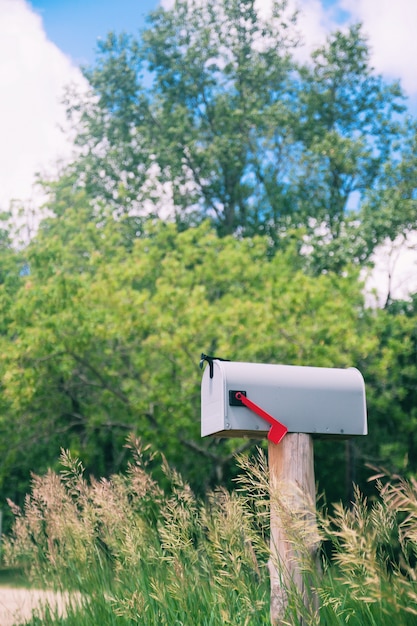
If you flatten it, you replace it. That oughta be the rule of the road.
By Bob Gaydos
As I suspected, this article, which I first published three years ago, has become a piece that bears repeating every year. because (1) there are (hopefully) new readers and new neighbors who will not have seen it and (2) I keep noticing things to add to it and (3) some people don’t seem to get one of the messages.
The original need to repeat was prompted by what I saw as a disturbingly increasing problem on narrow country roads: getting out of your own driveway. Specifically, backing out. This should not be a hazardous duty mission. Unfortunately, it often is. As I see it, it boils down to a lack of consideration or understanding. So, the annual summer reminder.
***
For most of my life, I’ve lived in small cities (Bayonne, Binghamton, Annapolis, Middletown) and one large town (Wallkill), which is really a mall-dotted highway surrounded by housing complexes. Throw in a few years living on college campuses. Basically, it’s been city or community living.
When you live with a lot of other people close by and you want to be relatively content, you learn the rules of the road, the do’s and don’ts of getting along. Mostly, it’s mind your own business and don’t make a lot of noise.
A few years ago, I moved to the country, a bit of upstate New York between the Hudson River and the Catskills that is often protected from major weather issues by the imposing Shawangunk Ridge.
Country living means owls, woodpeckers, chickens, coyotes and starry skies, oh my.
It’s nice. Well, usually. It’s quiet. Usually. In any case, it most definitely has its own rules of the road. Things a transplanted city boy ought to know. Something I call country etiquette.
The notion (see how I used the word “notion“ instead of “idea“?) that there was such a thing as country etiquette grew out of a recent conversation about a not uncommon country experience.
A few years ago, our quiet summer evening at home was disrupted by a loud squealing of tires and a loud thud. Right in front of our house.
We rushed out to find a car sitting in a culvert in front of our house, a distraught young woman sitting behind the wheel and our mailbox on the ground, post and all. I don’t recall who called 911, but state police arrived quickly, talked with the driver (who was shaken but not hurt), someone called a tow truck, we went back in the house and eventually everything was back to normal, except for the mailbox. Its career was over.
In short order, we replaced the mailbox and occasionally wondered what happened to the young driver. I suspected alcohol may have been involved.
A couple of weeks later, the whole scene repeated itself. Nighttime. Squeal. Thud. Car. Culvert. Young woman driver. Unhurt. Mailbox kaput.
Deja vu all over again, as Yogi Berra once said. Same follow up. Police. Tow truck. Mailbox flattened.
Again, we replaced it and the new one has survived ever since, although it’s leaning. But here’s the thing. Neither driver offered to pay to replace the mailbox (they both got out of their cars and talked to us) or to have it repaired. Now, it seems to me that a basic rule of country etiquette ought to be that if you wipe out someone’s mailbox (and get caught at it), the decent thing to do is to make it right again. Pay for a new one.
And that’s what got me thinking about other rules of country etiquette. What are some things to help someone new get along with neighbors who may not live right next door? Here’s what I’ve come up with so far:
— Having a handy supply of eggs is nice, but keep your chickens in your own yard as much as possible. Free range doesn’t mean the whole neighborhood, or, especially, the busy road. And chickens don’t move that fast.
— Don’t shovel your driveway snow into the road. It’s only extra work for the highway crews and it’s dangerous.
— When driving, wave at people walking along country roads. It’s downright neighborly.
— Walkers, please wear reflective clothing at night. It’s awfully dark out there sometimes and the roads are often winding and have no shoulder. We’d like to get to know you.
— Don’t let your dog walk on the road side. Preferably, don’t walk your dog on the road at all. Some drivers are less attentive than others. (See reference to mailboxes above.) And yes, clean up after Snoopy.
— Slow down and maybe swing wide for people at their mailbox. (A personal peeve of mine.) You can even wave.
— In fact, slow down in general. Posted speed limits are not merely suggestions and police will ticket.
— In special fact (and this is the issue that needs to be readdressed, which I mentioned at the top ), if you see someone backing out of their driveway or road to get on the typical narrow, no-shoulder, two-lane road in the country and you are a good quarter mile away, slow the heck down. Please. Let them get out in peace in one piece. It’s hard enough to back into a narrow country road with trees often blocking your vision without worrying whether that driver whizzing down the road is texting or talking on the phone or so totally engrossed in something on the radio that they don’t see you, even though you see them.
— In further fact, if you’re not going to back up a lot of traffic, just be nice and let people back out of their driveways even if they haven’t gotten their rear end out yet. It’s common courtesy. Yelling through your closed window at the person backing out is not. Being foreign to the area and in oh such a hurry to get to the state highway 5 miles away is not an excuse either. I suspect this may at least partially be the result of more city folk moving to the area, in which case this column should be all the more valuable to them. If you know someone who fits the bill, share it with them.
— Be patient with a farm tractor on the road. He’ll be out of your way shortly, or he’ll pull over as soon as he can. He’s working. Wave.
— Be honest at roadside food honor stands. Act like there are cameras in the trees.
— Free stuff at the foot of a driveway is really free. Don’t be embarrassed. If you want it, take it. Someone always does.
That’s what I came up with so far. If you have other suggestions, please leave them in the comment section.
While I’m at it, I figure I might as well add another feature of country living — a potpourri of handmade road signs. Here are a few I noticed:
— Corn maze, hay ride, pumpkins, pickles, sweet corn
— Beef sale
— Fresh garlic
— Sunflower patch, mums
— Hay
— Honey
— Farm fresh eggs
— U pick pumpkins
— Horse crossing
— Fresh key lime pie,
— We buy ATVs dead or alive
Like I said, nice.
‘Til next time at pet-friendly, open-carry Tractor Supply.