Posts Tagged ‘assassination’

Another War? You Can Bet on It!

Thursday, April 2nd, 2026

“Football, beer, and above all, gambling filled up the horizon of their minds. To keep them in control was not difficult.” George Orwell, 1984 

By Bob Gaydos

C617061E-9B2E-4022-93A2-AB489BEA8B80  If I were a wagering man, and having missed out on the Pam Bondi firing, I would lay a few sheckles on the likelihood that Trump will flush Pete Hegseth next and label him an ineffective Secretary of War.

   You can do that legally. I just found out. Somehow, the presence of so-called Prediction Markets escaped my attention as I struggled to maintain my sanity in a world going mad by design. Ironically, these markets are prime evidence of that phenomenon.

     And it has been happening for some time, starting with legalized sports betting. In my opinion, the emergence of legalized sports betting, not only on game outcomes, but specific moments within the game, has seriously eroded the simple enjoyment, never mind the credibility, of sports. The lure of big gambling money has made sports more profitable and players understandably want and deserve a share of the added money. Bigger contracts then mean higher costs at the stadium. Betting on a field goal or strikeout holds the lure of quick money to pay for the beer and hot dogs.

    It’s all about the money.

    But apparently it’s no longer energizing enough for people looking for an escape and maybe some easy money to just place a bet on whether some college or pro player will make or miss a foul shot. Now apparently you can bet on whether the coach will be fired and arrested at a DWI Checkpoint on the way home. Maybe he’ll run over someone.

   What are the odds? Who cares? What have you got to lose? If he makes it home safely, you can always bet on when Trump is going to lower tariffs again. That’s a surer bet.

    It’s also one of the things wrong with prediction markets. Never mind manipulating the stock market, people in positions of power can affect world events. People in power, if they choose to, can manipulate world events. And people in power, if they are of a mind to do so, might let someone know when to expect some unexpected event.

   Like the United States attacking Iran. While Trump was killing 168 Iranian school girls by giving the order to attack, someone betting on the prediction market was making a killing by predicting the attack would happen on the day it would happen. You may recall that Trump had just previously said talks between the U.S. and Iran were moving along on the nuclear weapons issue and no military action appeared to be imminent. No hints. No warning. Just bombs and a financial bonanza for someone.

   Some governors have sued to ban prediction markets as a form of legalized sports gambling, which their states do not allow. Democrats in Congress have introduced legislation to simply ban prediction markets in this country, but the White House, of course, has no problem with them.

  With Trump, a former casino owner in charge, the house can literally fix the game. Like kidnaping the Venezuelan president, also apparently a coincidental lucky big payoff for some anonymous bettor. And it’s probably not a coincidence that Trump’s sons, Eric and Don Junior, have a major stake in a prediction market and Don is an advisor to another one, Kalshi. No likelihood of collusion here.

    But really, forget the fact that America is losing jobs, prices on everything, not just gasoline, are rising daily, young men are struggling to find work and hoping the draft isn’t reinstituted, farmers are being bailed out by the government that killed their markets and millions can’t afford healthcare. That’s just the day-to-day reality in Trump’s America. Prediction markets drag everything down to a lower level of humanity.

   Betting on war, assassinations, or some other form of others’ misfortune for personal financial gain is a dehumanizing activity. It’s immoral. A perverted version of no pain, no gain. As Orwell foresaw, it’s surrender disguised as entertainment. It’s like saying, as long as the world is so screwed up, I might as well try to make some money off it. 

    Forget it, pal. That game is rigged for the House, too.


The Measure of the Man

Monday, November 22nd, 2021
 
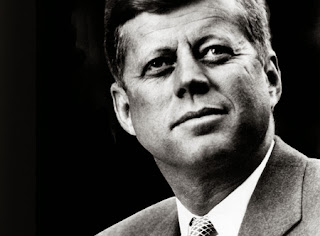
John F. Kennedy

(Reprinted from The Retiring Mind… November 22, 2013)

By Bob Gaydos

     The first editorial I wrote for the Times Herald-Record in Middletown, N.Y., appeared on the 20th anniversary of the assassination of John F. Kennedy. I wrote the headline, too: “The measure of the man.” 
Trying to “measure” the meaning of the life of a man who was literally loved and idolized by millions of people is no easy task, especially for a rookie editorial writer’s debut effort. But that’s what newspapers do and, in truth, I took it as a good omen that remembering JFK was my first assignment. He was a hero to me as to many young men my age when he was elected president. It was a combination of things: his youth, his wit, his easy-going style, his intelligence, his words, his sense of justice. Plus, we shared the same birthdate: May 29.
     As fate would have it, JFK would come to be remembered, not on his birthday, but on the anniversary of his death. And not so much for what Americans received for having him as president for 1,000 days, but rather for what we lost by not having him much longer.
     That first editorial said, in essence, that it would take more than 20 years to measure the meaning of the man. It acknowledged the things we had learned about JFK in the years since the shooting in Dallas — the flaws that made him human — as well as what I felt were his positive contributions. Thirty years later, no longer a rookie editorial writer — indeed, now retired after 23 years of writing editorials — with Nov. 22 approaching, I realized I had to write about JFK 50 years after his death (because that’s what old newspaper guys do). Before I started, I asked one of my reliable sounding boards, my son, Zack, what he knew about JFK. Zack is 19 and better informed than a lot of young people his age, so I figured his answer would provide me with a fair sense of what our education system had been telling kids about Kennedy.

   “He was the first Catholic president,” Zack said. Correct. “He had an affair with Marilyn Monroe.” Uh, correct. ‘There’s still some theories that there was more than one shooter.” Right. “Do you think the Kevin Costner movie (“JFK,” directed by Oliver Stone) was true?” Well, the people portrayed were real. “The Bay of Pigs didn’t go too well.” No, it didn’t. I took the opportunity to point out that Cuba was the site, not only of Kennedy’s biggest failure in global affairs, but also his biggest success.

     I was a little older than Zack is now when the world stood at the brink of a nuclear war over the presence of Soviet missile-launching sites in Cuba, aimed at the United States. I was a senior in college and knew full well, as did all my classmates, than no 2-S deferment was going to exempt me from what might happen if the Soviets did not — as Kennedy demanded — remove their missiles. Kennedy ordered the U.S. Navy to blockade Cuba to prevent the shipment of Soviet missiles and equipment. Nikita Khrushchev, Soviet president, who had initially denied the existence of the missile sites, sent a naval fleet to Cuba, loaded with supplies and armed for battle. As the world watched and waited and prayed, Kennedy and Khrushchev exchanged messages. Kennedy prevailed. The Soviet fleet stopped short of Cuba and turned around. I lived to write this remembrance. Kennedy was dead not long after.

     So here I am 50 years later, still looking to take the measure of the man and still wondering how that is possible. Kennedy had the gift of engagement. He appeared to be comfortable with whomever he was speaking. He had tremendous appeal to young people, being so different from the older, stodgier presidents who preceded him. He created the Peace Corps — a legacy that continues to this day with not enough fanfare. He made many Americans — and this is not a small thing — truly proud to be Americans. Not in an arrogant, flag-waving, we-know-better-than-you way. Just proud. And he cheated on his wife and kept his serious health problems a secret from us and sometimes needed to be prodded by his brother, Bobby (another tragic loss) to take the proper (courageous) stand on issues.

     So the question I still ask myself is, what might JFK have done, what might he have meant to America and the world, if he had lived longer? What did we lose at Dealey Plaza? Certainly, whatever innocence we still possessed. The wind was sucked from our sails as a nation and our domestic politics have slowly and steadily deteriorated into such partisanship that is virtually impossible for any president to speak to the minds and hearts of a majority of Americans the way Kennedy did. Maybe it would have happened even if Kennedy had lived a longer life and gone on to be an ambassador to the world of what America stands for. Or maybe not.

     It dawns on me in writing this that it is an ultimately frustrating task to try to take the measure of another man or woman. I know what JFK meant to me personally. I know a lot of others feel similarly and others do not. I know what history has recorded (he was also the youngest man to be elected president) and what the tabloids have told us. I have a sense of what I would like to think Kennedy would ultimately have meant had he not died so young. But it’s only speculation.

     The only man I can truly take the measure of is myself. It is 50 years since that morning when I was waiting at home to go to Fort Dix, N.J., to begin six months of active duty training. How do I measure up today? That’s a question I work on every day. It wasn’t always thus, but the years have a way of insisting on perspective. Maybe the answer will appear in some other writing. I have neither the space nor the inclination to do so here. I will say that, on balance, I’ll probably give myself a passing grade, but there’s still some stuff I’m learning. For now, I’m through trying to take the measure of JFK, as man or president. Let the historians have at it. I’m going to try to take his advice and ask not what life can do for me, but what I can contribute to life. And I’m also going to remember to honor him not on the date he died, but on the date we both were born. 

rjgaydos@gmail.com

bobgaydos.blogspot.com


The Measure of the Man, II

Friday, November 22nd, 2013

By Bob Gaydos

John F. Kennedy

John F. Kennedy

The first editorial I wrote for the Times Herald-Record in Middletown, N.Y., appeared on the 20th anniversary of the assassination of John F. Kennedy. I wrote the headline, too: “The measure of the man.”

Trying to “measure” the meaning of the life of a man who was literally loved and idolized by millions of people is no easy task, especially for a rookie editorial writer’s debut effort. But that’s what newspapers do and, in truth, I took it as a good omen that remembering JFK was my first assignment. He was a hero to me as to many young men my age when he was elected president. It was a combination of things: his youth, his wit, his easy-going style, his intelligence, his words, his sense of justice. Plus, we shared the same birthdate: May 29.

As fate would have it, JFK would come to be remembered, not on his birthday, but on the anniversary of his death. And not so much for what Americans received for having him as president for 1,000 days, but rather for what we lost by not having him much longer.

That first editorial said, in essence, that it would take more than 20 years to measure the meaning of the man. It acknowledged the things we had learned about JFK in the years since the shooting in Dallas — the flaws that made him human — as well as what I felt were his positive contributions.

Thirty years later, no longer a rookie editorial writer — indeed, retired after 23 years of writing editorials — with Nov. 22 approaching, I realized I had to write about JFK 50 years after his death (because that’s what old newspaper guys do). Before I started, I asked one of my reliable sounding boards, my son, Zack, what he knew about JFK. Zack is 19 and better informed than a lot of young people his age, so I figured his answer would provide me with a fair sense of what our education system had been telling kids about Kennedy.

“He was the first Catholic president,” Zack said. Correct. “He had an affair with Marilyn Monroe.” Uh, correct. ‘There’s still some theories that there was more than one shooter.” Right. “Do you think the Kevin Costner movie (“JFK,” directed by Oliver Stone) was true?” Well, the people portrayed were real. “The Bay of Pigs didn’t go too well.” No, it didn’t.

I took the opportunity to point out that Cuba was the site, not only of Kennedy’s biggest failure in global affairs, but also his biggest success. I was a little older than Zack is now when the world stood at the brink of a nuclear war over the presence of Soviet missile-launching sites in Cuba, aimed at the United States. I was a senior in college and knew full well, as did all my classmates, than no 2-S deferment was going to exempt me from what might happen if the Soviets did not — as Kennedy demanded — remove their missiles.

Kennedy ordered the U.S. Navy to blockade Cuba to prevent the shipment of Soviet missiles and equipment. Nikita Khrushchev, Soviet president, who had initially denied the existence of the missile sites, sent a naval fleet to Cuba, loaded with supplies and armed for battle. As the world watched and waited and prayed, Kennedy and Khrushchev exchanged messages. Kennedy prevailed. The Soviet fleet stopped short of Cuba and turned around. I lived to write this remembrance. Kennedy was dead not long after.

So here I am 50 years later, still looking to take the measure of the man and still wondering how that is possible. Kennedy had the gift of engagement. He appeared to be comfortable with whomever he was speaking. He had tremendous appeal to young people, being so different from the older, stodgier presidents who preceded him. He created the Peace Corps — a legacy that continues to this day with not enough fanfare. He made many Americans — and this is not a small thing — truly proud to be Americans. Not in an arrogant, flag-waving, we-know-better-than-you way. Just proud.

And he cheated on his wife and kept his serious health problems a secret from us and sometimes needed to be prodded by his brother, Bobby (another tragic loss) to take the proper (courageous) stand on issues. So the question I still ask myself is, what might JFK have done, what might he have meant to America and the world, if he had lived longer? What did we lose at Dealey Plaza?

Certainly, whatever innocence we still possessed. The wind was sucked from our sails as a nation and our domestic politics have slowly and steadily deteriorated into such partisanship that is virtually impossible for any president to speak to the minds and hearts of a majority of Americans the way Kennedy did. Maybe it would have happened even if Kennedy had lived a longer life and gone on to be an ambassador to the world of what America stands for. Or maybe not.

It dawns on me in writing this that it is an ultimately frustrating task to try to take the measure of another man or woman. I know what JFK meant to me personally. I know a lot of others feel similarly and others do not. I know what history has recorded (he was also the youngest man to be elected president) and what the tabloids have told us. I have a sense of what I would like to think Kennedy would ultimately have meant had he not died so young. But it’s only speculation.

The only man I can truly take the measure of is myself. It is 50 years since that morning when I was waiting at home to go to Fort Dix, N.J., to begin six months of active duty training. How do I measure up today? That’s a question I work on every day. It wasn’t always thus, but the years have a way of insisting on perspective. Maybe the answer will appear in some other writing. I have neither the space nor the inclination to do so here. I will say that, on balance, I’ll probably give myself a passing grade, but there’s still some stuff I’m learning.

For now, I’m through trying to take the measure of JFK, as man or president. Let the historians have at it. I’m going to try to take his advice and ask not what life can do for me, but what I can contribute to life. And I’m also going to remember to honor him not on the date he died, but on the date we both were born.

bob@zestoforange.com